Hearing diagnostics: what it includes, how much it costs, and why, when and where it's best to have it done
What is a "hearing test" procedure?
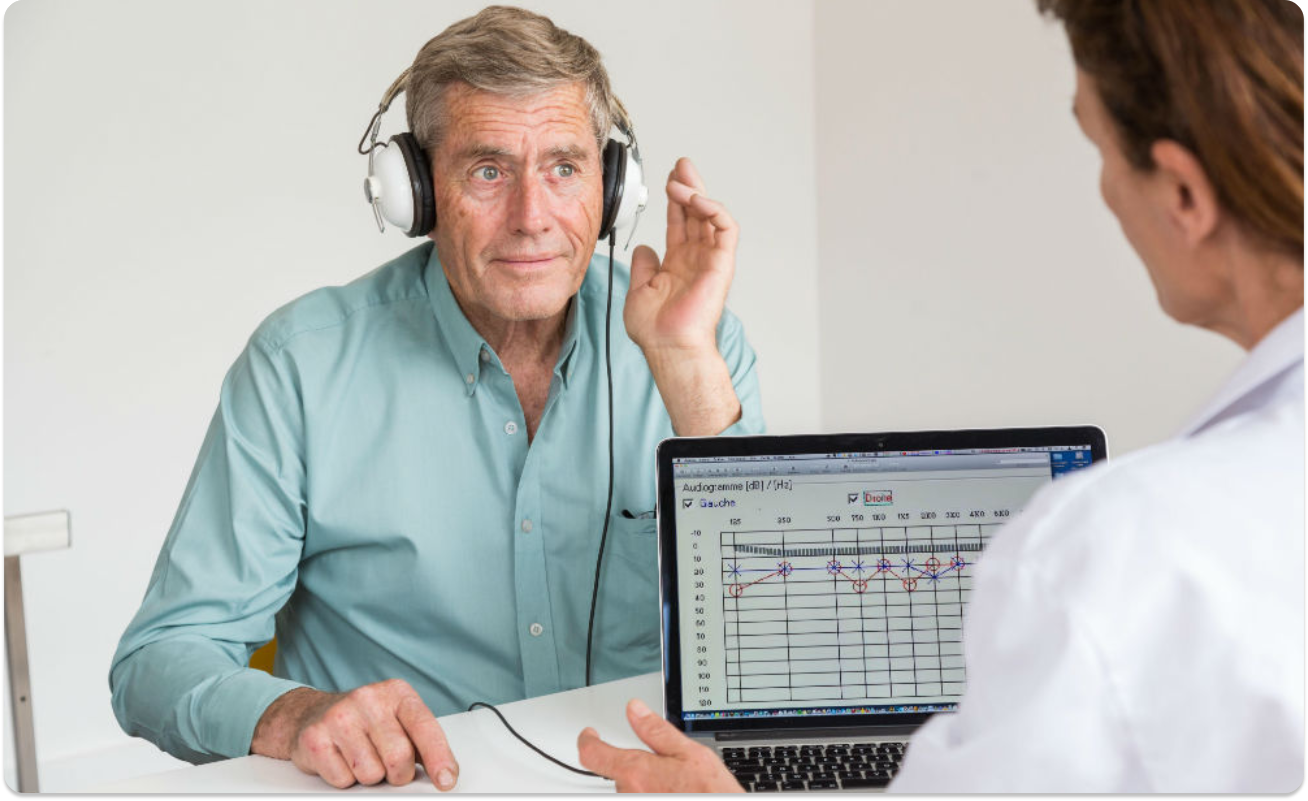
This is also called hearing diagnostics. It's a procedure that determines the ability of the auditory analyzer to perceive sound waves of different frequencies. It's performed to identify the degree and type of hearing loss. The results of audiometry are displayed on a graph known as an audiogram.
In simple terms, hearing diagnostics is an ear check-up. Doctors use various methods to find out how well a patient hears sounds. The test checks which sounds you can hear and which you can't. All results are recorded on an audiogram — a graph showing how your hearing works.
Want to solve your hearing problem once and for all?
Our hearing aid specialists will take an audiogram, select suitable hearing aid models and answer all your questions.
Hearing diagnostics: what methods exist?
The Mir Sluha center uses the following hearing diagnostic methods:
Audiometry – A method for determining the hearing threshold and level of hearing loss. The patient listens to sounds of different frequencies through headphones. The result is an audiogram.
Tympanometry –
Acoustic reflexometry (AR) – A quick method for diagnosing the condition of the hearing organ. The reaction of the middle ear muscles to sound stimuli is measured.
Otoacoustic emissions (OAE): Assessment of the condition of the cochlea's hair cells using specialized equipment.
ABR: Recording of auditory brainstem response allows detection of disorders in the auditory nerve.
ASSR – Objective assessment of auditory sensitivity, especially in children. Provides an approximate audiogram.
When should you undergo hearing diagnostics?
Hearing diagnostics is an important step in caring for your health. It should be performed if hearing loss is suspected and to monitor the condition of the auditory analyzer.
It's recommended to have a hearing test in the following cases:
- Suspected hearing loss: reduced hearing, difficulty in conversation, trouble understanding in noise.
- Preventive check-ups — especially after age 50.
- Risk factors: genetic predisposition, work in a noisy environment.
- Monitoring the condition of the auditory analyzer and discussing results with a doctor.
Early detection of problems will help preserve your hearing for years to come.
How much does hearing diagnostics cost in Almaty in 2024?
The price may vary depending on the clinic and the methods used. The cost may include the full range of examinations or only individual procedures.
5 reasons to get a hearing test at the Mir Sluha center
- Professional doctors and modern equipment
- An individual approach to every patient
- Fast and accurate examination
- Recommendations for correcting hearing loss
- Convenient clinic locations
3 problems we see in the market when providing "Hearing Diagnostics" services
1 Insufficient awareness of the importance of regular diagnostics
Solution: The Mir Sluha center provides free consultations and publishes helpful articles.
2 Lack of access to quality medical care
Problem: Some regions lack good specialists.
Solution: We distribute highly qualified staff to branches throughout Kazakhstan.
3 Stereotypes and fear of examination
Problem: People may have biases and fear of diagnostics.
Solution: Our specialists know how to work with such cases and help patients feel comfortable.
What to do after a hearing test?
After diagnostics, it's recommended to discuss the results with a doctor. If needed, they will suggest additional examinations or recommendations.
Regular diagnostics will help preserve your hearing for years to come.
Stay healthy!