What cochlear implantation is and how a cochlear implant works
When a hearing aid can no longer solve the problem
Hearing loss doesn't just affect the ability to hear sounds. It affects speech development, learning, communication, safety, emotional wellbeing and the quality of life of the whole family.
In some cases, even with very severe hearing loss or deafness, modern technology can restore access to sounds and speech. One such solution is cochlear implantation — a high-tech method of hearing rehabilitation for children and adults.
Why a person may not hear even with a good hearing aid
Sound travels through the outer and middle ear to the inner ear — the cochlea. Inside the cochlea are sensitive hair cells that convert sound vibrations into electrical signals and transmit them via the auditory nerve to the brain.
In severe sensorineural hearing loss, these cells may be damaged or completely lost. In this situation, a hearing aid amplifies the sound, but can't replace non-functioning cells, so a doctor may recommend cochlear implantation.

What cochlear implantation is
Cochlear implantation is a system that helps people with severe hearing loss, in which the cochlear implant takes over the function of damaged hair cells and delivers sound information directly to the auditory nerve.
It's not just surgery, but an entire process that includes:
- pre-surgery evaluation and candidate selection;
- the surgical operation;
- post-surgery fitting and hearing-and-speech rehabilitation.
How a cochlear implant is built
A cochlear implant consists of two parts: internal and external.
- The internal part is implanted surgically and includes a receiver and an electrode array placed in the cochlea.
- The external part includes the speech processor, microphone and transmitting coil.
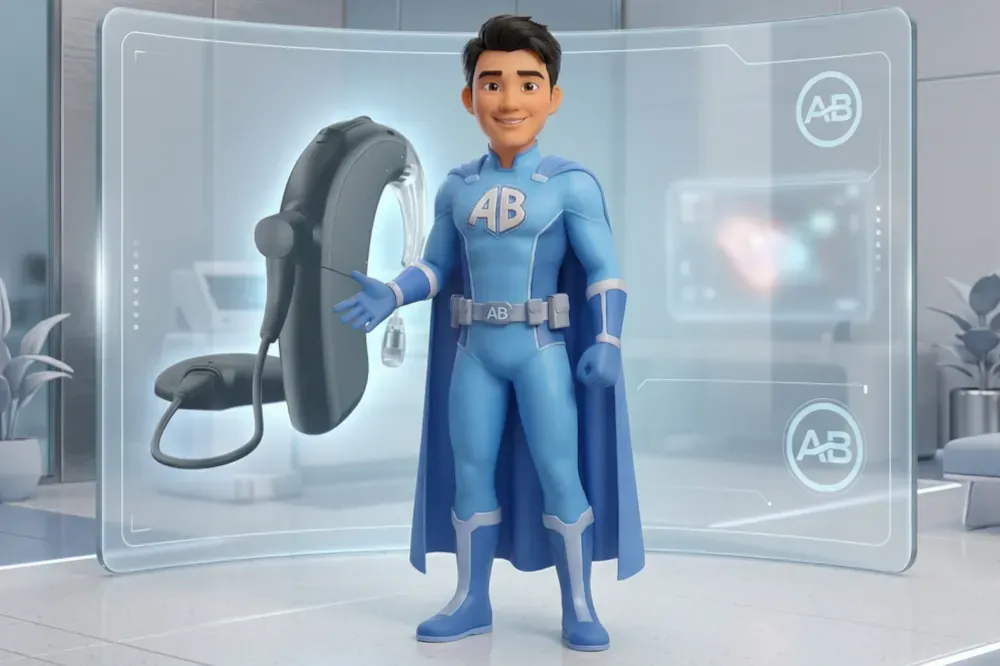
How a cochlear implant works
- Microphones pick up sounds from the environment.
- The sound processor converts the sounds into digital signals.
- The transmitting coil sends the signal to the internal part of the system.
- The electrode array stimulates the auditory nerve.
- The brain recognizes the electrical impulses as sound.
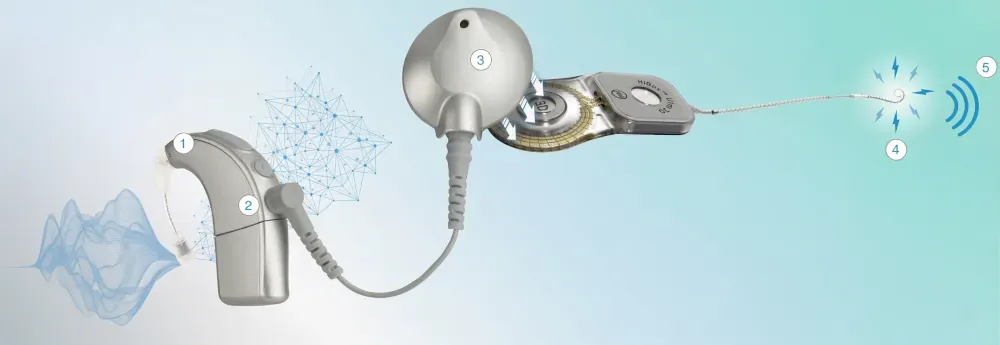
How a cochlear implant differs from a hearing aid
- A hearing aid amplifies the acoustic signal. A cochlear implant works differently: it converts sound into electrical impulses and delivers them directly to the auditory nerve, bypassing the damaged hair cells of the inner ear.
- A cochlear implant doesn't depend on preserved hair cells the way a hearing aid does. It converts sound into electrical impulses and delivers them directly to the auditory nerve.
That's why cochlear implantation is considered for patients for whom hearing aids no longer provide adequate speech understanding and access to sound information.
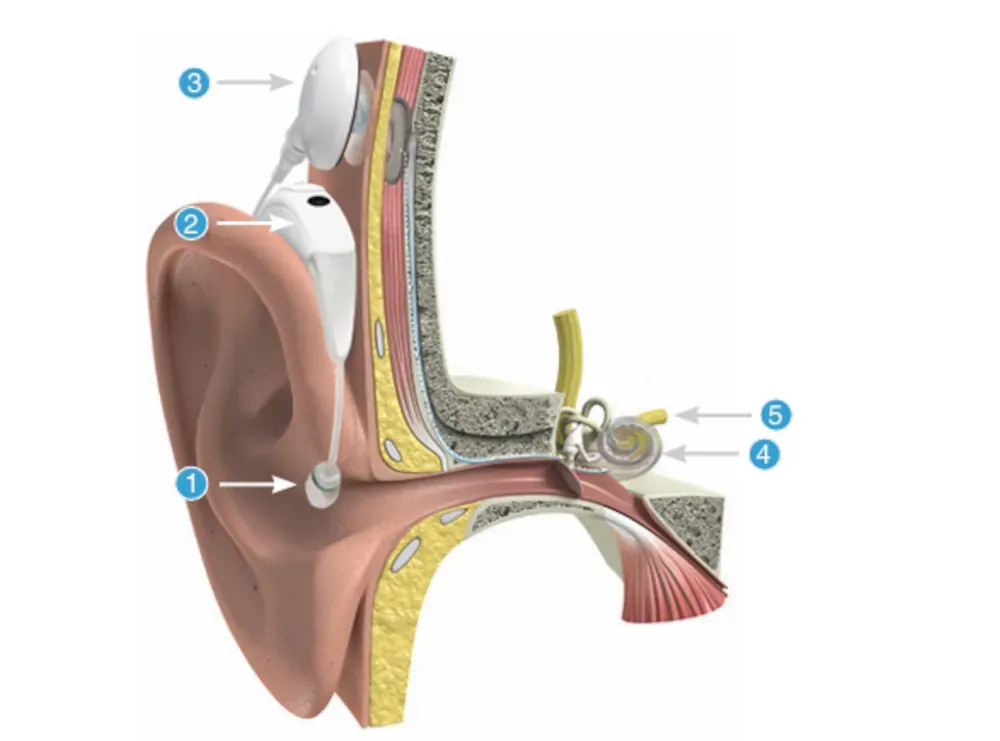
How a cochlear implant works
- Microphone / sound receiver
- External speech processor (behind the ear)
- Transmitting coil (magnet)
- Electrode array in the cochlea
- The cochlea — the site of auditory nerve stimulation
Who may be a candidate for cochlear implantation
Cochlear implantation is considered for children and adults with significant bilateral hearing loss, when correctly fitted hearing aids provide only minimal benefit.
The decision is made individually after a comprehensive evaluation by a team of specialists.
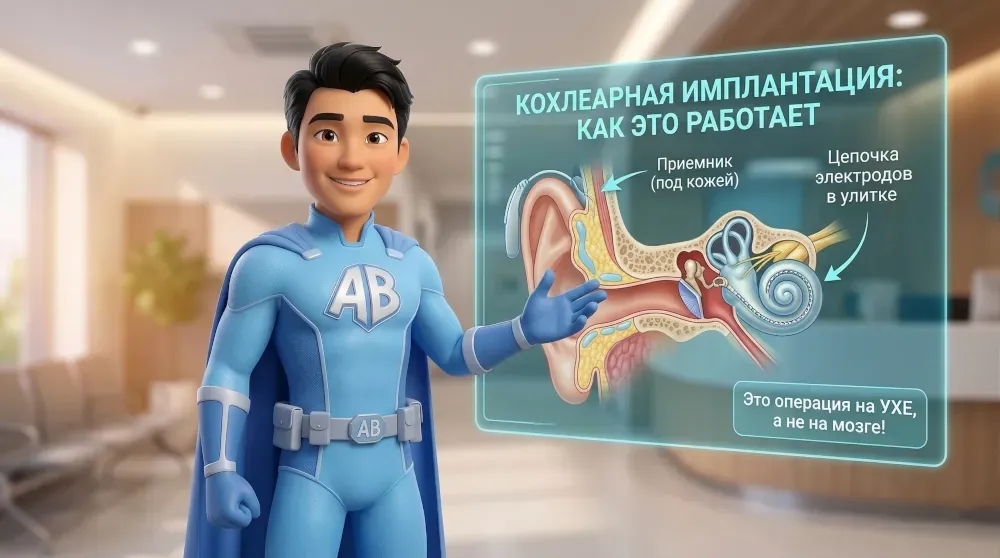
How cochlear implantation surgery is performed
The operation is performed under general anesthesia and usually lasts 2–3 hours. After the healing period, the speech processor is switched on for the first time, followed by a series of fittings.
Why surgery is only the beginning
After the implant is switched on, a person gains access to sound, but the brain needs time to learn to recognize the new signals. That's why success depends on regular device fitting, hearing-and-speech rehabilitation and active family involvement.
What's important for parents of children with hearing loss to know
- regular processor fittings;
- hearing-and-speech therapy;
- daily work with the family;
- support from teachers and specialists;
- consistent use of the device throughout the day.
What's important for adult patients to know
For adults, a cochlear implant can help them actively participate in life again: understand speech better, communicate without strain, return to work, study, and the familiar sounds of the world around them.
The main thing to remember
Cochlear implantation is a modern method of helping children and adults with severe hearing loss when hearing aids no longer provide sufficient benefit. Success depends on accurate diagnostics, quality fitting, regular rehabilitation and active family involvement.