The recovery period after cochlear implantation
What the patient and family should expect
For many people, the surgery seems like the hardest part. But in practice, an equally important period begins after cochlear implantation — recovery, healing, the first system activation, and gradual adaptation to a new hearing experience.
It's exactly during this period that patients and parents have the most questions: what counts as normal, when will the first activation happen, why doesn't the result appear instantly, and how can you help yourself or your child go through this calmly.
It's important to understand the key point: recovery after cochlear implantation isn't "waiting for a miracle" — it's a sequential, clear and manageable process.
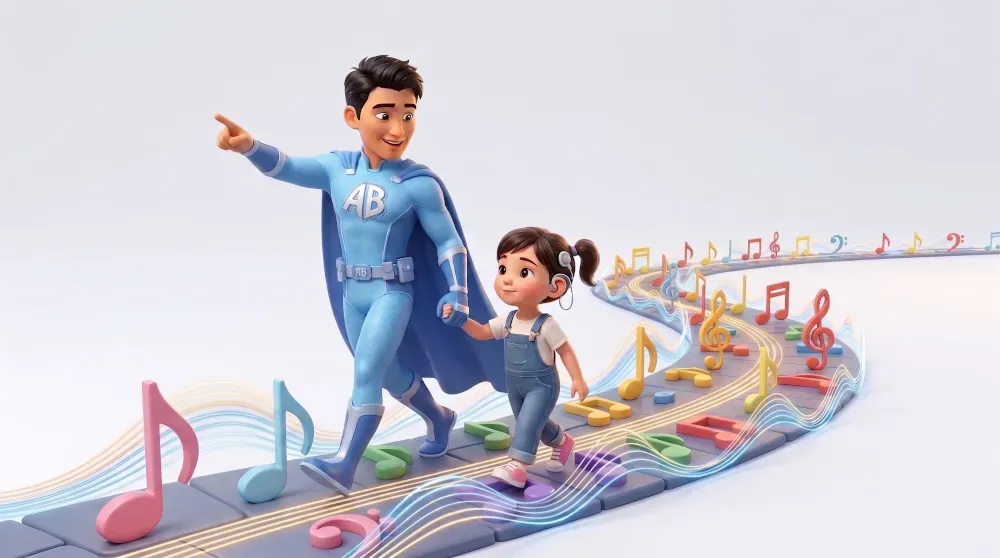
Cochlear implantation is a system of stages
Cochlear implantation as a whole is viewed not as a single operation, but as a system of measures that includes pre-surgery evaluation, the surgical stage, and post-surgery rehabilitation.
Why isn't the system activated right after surgery?
One of the most common questions is: if the implant is already in place, why doesn't the person start hearing immediately?
The answer is very simple: after surgery, the tissue needs time to heal. The external components of the system are usually activated a few weeks later, once the surgical site has recovered.
This is a standard stage, not a delay or a cause for concern.
For the family, this is an especially important point in terms of expectations. Surgery and the start of hearing through the implant are different stages. There's always a recovery period between them.
What happens in the first weeks after surgery
Right after the surgical procedure, the body begins the usual healing process. The internal part of the system is already in place, but its work with the external components will begin later.
The hair behind the ear gradually grows back, and the incision itself and the implanted parts of the device become unnoticeable.
For many patients, and especially parents, this is reassuring information. Anxiety often intensifies specifically because of uncertainty: "What will it look like?", "Will it be noticeable?", "Will there be a visible scar?"
The modern surgical approach involves carefully placing the internal system behind the ear, and after healing, there are no visible signs of the implant at all.
Should you worry that "something is wrong" if there's no sound yet?
No. The absence of hearing sensations right after surgery is normal, because the external part isn't connected yet.
During this period, the patient's and family's task isn't to "evaluate the result," but to calmly go through the recovery stage and wait for the initial system activation.
Healing itself is a necessary part of the path toward further hearing rehabilitation.
The absence of an instant effect after surgery doesn't mean the procedure was unsuccessful. It simply means the process is following its correct sequence.
When does the first activation happen
The day when the patient's external components are installed for the first time and the system is activated is called the initial stimulation, or first activation.
The goal of this stage is to select a comfortable program in order to begin optimizing hearing perception.
The initial activation usually happens after 3–4 weeks.
This is a very important and exciting moment, especially for parents of children. But it's useful to know in advance: the first activation isn't the final fitting, and it shouldn't be seen as an "exam" for the child or adult patient.
What kind of reactions can happen at first activation?
Reactions to sound during the initial activation can vary widely, and that's normal.
A child or adult may become wary, ignore the sound, or, on the contrary, react very emotionally. All of these are considered normal.
This is especially important for parents, who often mentally prepare themselves for one specific scenario — for example, an immediate, vivid emotional reaction.
In practice, the reaction can be restrained, delayed, or mixed. This doesn't indicate a poor result at all. The brain needs time to start recognizing new signals.

Why repeat fittings are needed after the first activation
After the initial activation, the patient continues to regularly visit an audiologist for more precise fitting of the speech processor.
At first, these visits are more frequent, then less so. Later on, most children undergo programming a few times a year.
This means that a good hearing outcome doesn't depend on a single fitting. It's built up gradually.
The specialist adapts the system's operation to the patient's individual characteristics, while the brain simultaneously learns to better recognize sound information.
That's exactly why you shouldn't expect all of the implant's capabilities to be revealed right after the first visit. It's much more accurate to see this as a process of gradual progress.
Remote fittings for Marvel from Advanced Bionics
The Marvel speech processor from Advanced Bionics allows fittings to be done remotely.
All you need for this is an ordinary smartphone.
The average fitting frequency is 4–5 times in the first year. In most cases, a speech-language pathologist doesn't need to be present.
In addition, at our centers you can get a fitting done for free under OSMS.
Remember that using a cochlear implant always comes with costs. So always check the "cost of ownership" — the level of expenses you'll incur — with cochlear implant distributors or in cochlear implantation community chats.
This will allow you to get a top-tier implant without unnecessary overpayment.
What affects success after surgery

The outcome after cochlear implantation depends on several well-known factors.
- the duration of deafness;
- previous hearing experience;
- age at implantation;
- the family's involvement in developing the child's hearing and communication.
For the best possible outcome, full daily use of the cochlear implant and consistent therapy are especially important.
Full daily use of the implant is a mandatory condition for hearing development.
If a child doesn't wear the device during all waking hours, progress may be insufficient. This is an important point for adult patients too: consistency matters.
Why rehabilitation matters just as much as the surgery
A long stage of hearing-and-speech rehabilitation begins after cochlear implantation.
Successful post-surgery rehabilitation requires collaboration between:
- a speech-language pathologist;
- an audiologist;
- a speech therapist;
- an ENT audiologist;
- a psychologist;
- and other specialists.
Patients stay in touch with the implantation center for a long time, since processor fittings, technical issue resolution, and support for hearing-and-speech development are all necessary.
Both specialists and the family itself play a very big role in this.
For children, the involvement of parents and loved ones is considered one of the essential components of post-surgery rehabilitation.
Their role in teaching the child hearing and speech development skills, as well as providing psychological and social support, matters a great deal.
Surgery is the beginning, but the implant's potential is unlocked in everyday life: at home, during lessons, in communication, and in familiar situations.

What's especially important for a child's parents

For parents, the period after surgery often turns out to be more emotionally difficult than expected.
Before surgery, anxiety is usually tied to fear of the procedure itself. After surgery, it's tied to waiting for results and a constant inner question: "Is everything going the way it should?"
Here, it's important to rely not on anxiety, but on the objective logic of the process.
- It's normal for there to be a pause between the surgery and the first activation.
- It's normal for the reaction to the first activation to vary.
- It's normal for the system's fitting to happen gradually, not all at once.
- It's normal for hearing and speech development to require time, consistency, and family involvement.
There's no need to demand instant results from yourself or your child. It's far more important to move forward step by step and stay steady.
What's important for adult patients to remember
Adult patients can also find the adaptation period challenging.
Many have lived with limited hearing for a long time and come to implantation with high hopes.
These hopes are understandable and natural. But it's best to think of recovery as a gradual return of access to the world of sound, rather than a single instant event.
New hearing information takes getting used to. The system is fitted gradually. The brain learns to recognize signals. This is a natural part of adapting after cochlear implantation.
How to reduce anxiety during recovery
The most reliable way to reduce fear is to understand what's happening and why each stage is necessary.
- Healing happens after surgery.
- Initial activation is performed after healing.
- Repeat fittings follow the first activation.
- Rehabilitation begins and continues in parallel.
When this route is clear, recovery stops feeling chaotic and frightening. The patient and family get the sense that they're not "waiting for who-knows-what," but are moving through a clearly structured path.
The main thing to remember
The recovery period after cochlear implantation is an important and natural part of the entire rehabilitation system.
After surgery, time is needed for healing, so the external components aren't activated right away, but a few weeks later. The first activation marks the beginning of fitting hearing perception, and reactions to it can vary — all of this is normal.
Repeat fittings and long-term rehabilitation follow, in which specialists and family play a major role.
The most important thing is not to expect instant perfection, and not to face your anxiety alone.
After cochlear implantation, a person doesn't just go through surgery. Step by step, they gain the ability to build a new connection with sounds, speech, communication, and the world around them.